
A year after taking delivery of a Tesla Model Y and using it for airport transfers, it seems a good time to write a review. There are a handful of people I know who bought a brand-new Tesla Model Y for their airport transfer business. The feedback is positive. The Tesla Model Y is spacious, and it ticks the box for business passengers who want to reduce their emissions. A £50,000 investment in a new technology (vehicle) is not something everyone wants to risk though.
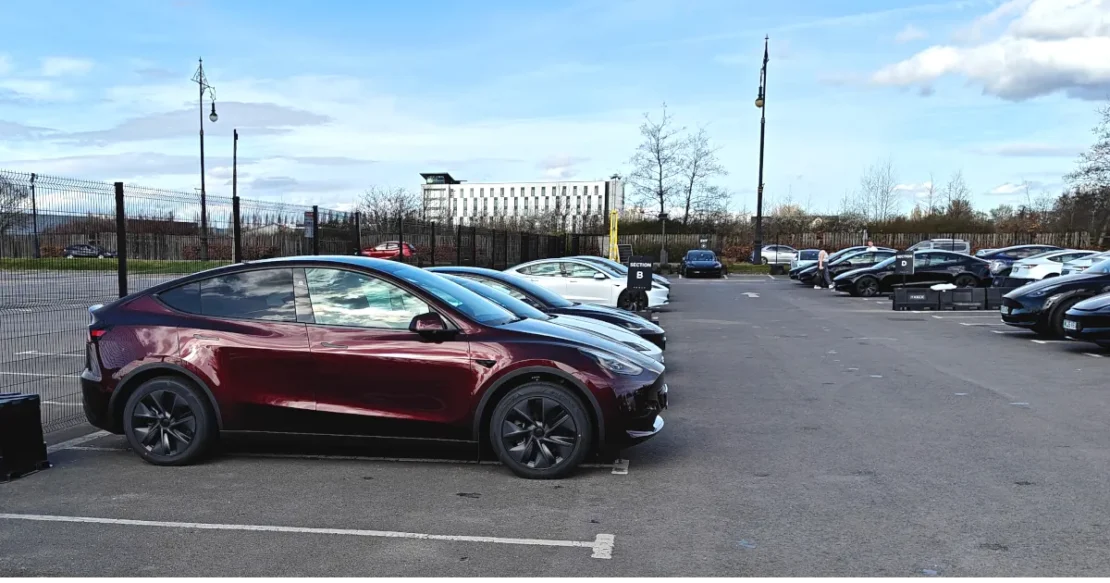
I remember the train journey to Tesla Manchester to collect the Model Y. It wasn’t my first EV (electric vehicle) experience but, it was the first time buying one. On arrival, you just use the Tesla app on your phone to take ownership and away you go. As a driver, the first thing you notice is the one pedal driving experience. It is unlike a car with an internal combustion engine. When you lift off the throttle, the electric motor diverts energy back into the battery.
EV Benefits
Regenerative braking is just one benefit of driving a Tesla. It doesn’t just add more range to the vehicle; it saves using the brakes as much. This means that brake disks and brake pads last a lot longer than a normal car, this delivers a cost saving. Likewise, charging the vehicle overnight at home delivers another cost saving. This is huge when compared to an internal combustion engine. In some circumstances, it can be 90% cheaper than diesel.
There are other benefits to using an electric car for airport transfers. An electric motor is near silent at low speeds and without a gearbox or clutch, moving off is far smoother. The car is much simpler too, having no engine saves a lot of space and instead, gives room for an additional front boot. As the batteries are mounted under the floor, the rear cabin has no transmission tunnel or exhaust system – this affords more passenger space and a flat floor. Putting the batteries under the floor also lowers the centre of gravity and makes the Model Y feel planted.
Something else I like is the app. From my phone I can access the security cameras, check the battery’s state of charge, open the car remotely or start the climate control. In the winter months, it is a perpetual novelty to defrost the car and pre-heat the interior to 22 degrees Celsius. Gone are the days of scraping ice off a frozen windscreen or waiting for the interior to warm up – instead, the heated seat and steering wheel are nicely toasty when I get in.
The Downsides of EV Ownership
Enough of the positives though because a review is only fair when it considers the downsides. Owning a Tesla Model Y and running it as an executive private hire vehicle has some challenges. The first is planning the charging stops when I’m away from the home charger. These stops can be up to 40 minutes if adding more than 250 miles of range. On rare occasions, I have had to queue for a charger, sometimes up to ten minutes! Then there is the charging cost.
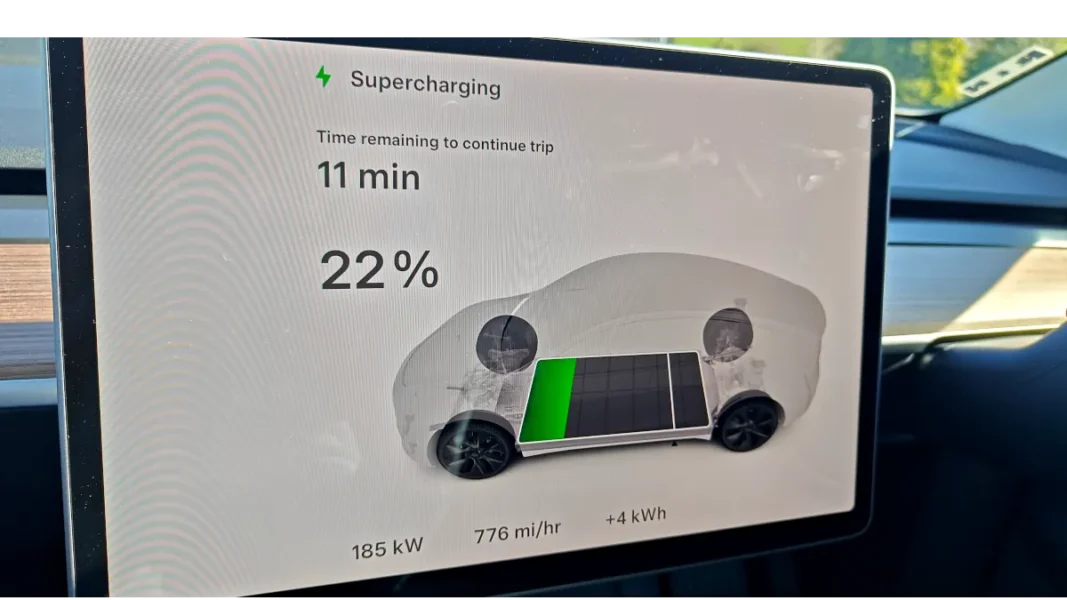
Customers are often intrigued about how an EV works in comparison to a regular car. They frequently ask, “how much does it cost to charge an EV”? The answer is not simple. Unlike petrol or diesel which varies maybe 5% between fuel brands or geographic location, EV charging costs vary wildly. The simplest way to view this is in four ways:
- Home charging is up to 90% cheaper than diesel
- Tesla Supercharger (Off peak) typically 7pm to 7am, is just under half the cost of diesel
- Tesla Supercharger (peak) typically 7am to 7pm, is a smidge less than diesel
- Supercharging on a public network (non-Tesla) is more than double the cost of diesel
The Tesla Model Y is not a perfect solution. Charging somewhere along a route rather than at a destination, can cause issues. The firm ride sometimes feels unsettled. If a second driver shares the vehicle and needs a wall charger installation, it can cost over £1,000. This said though, the Model Y is the best solution at the current time. Sure, you must plan your day out correctly but, it is an EV that works in the real world!
The Tesla Supercharging Network
The big advantage of owning a Tesla, is having access to the Tesla supercharger network. Compared to other networks, it delivers better rates. It also works brilliantly with the satellite navigation system in the car. There is no need to pay at the charger or download more apps. You simply set up an account when you take ownership and then forget about it. All you have to do is plug in on arrival and then disconnect afterwards.
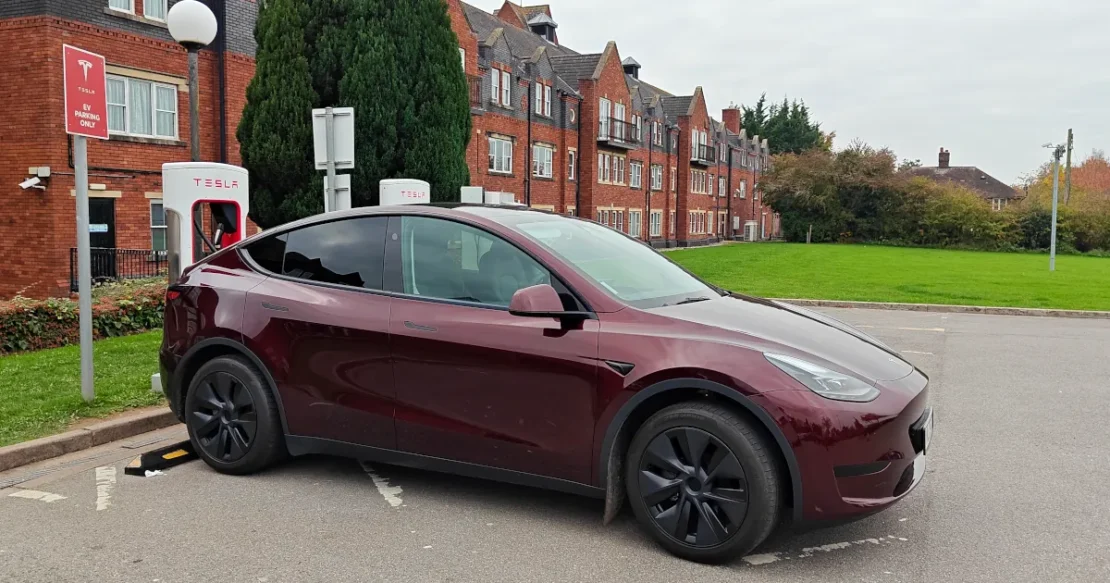
An account that identifies the vehicle at the charger gives another bonus: It is especially useful when the car is being used by another driver – they do not need to pay or worry about an account – they simply plug-in, hassle free. This simplicity is carried over when another driver needs to collect the Tesla. There are no key swapping arrangements needed or having to meet up. All that is required is the app on their phone and away they go.
The Ongoing Costs of an EV
I have found the Tesla Model Y to be a good car for airport transfers. It has generous space for passengers and luggage. The ongoing running cost are another advantage. Where a diesel car needs an oil and filter change, a Tesla simply keeps going! Not only are annual servicing costs pretty much eliminated, but the downtime required for garage visits is minimal. The Tesla can keep working where a diesel car needs time off the road to incur its garage bills!
The game changer is not how the vehicle drives or how much it costs to charge. It is the running costs over an extended period. Servicing costs are a major factor that cannot be ignored, especially when you consider the accumulated savings. In the first year of ownership, (apart from a new set of tyres) all the Model Y required was two new wiper blades, costing the grand sum of just £44. You can even order them through the app and have them delivered to your home address.
Conclusion
Adding everything up on paper, the Tesla Model Y has been an affordable car. Buying in March 2025, gave an incentive of 0% finance. We claimed back 20% VAT which covered the deposit and the car has an upgraded (15-speaker) premium sound system. As an upgrade over the older Tesla Model Y, this one has Hardware 4 fitted (which now includes the AI assistant, Grok). This delivers faster and more powerful processing inside the car for things like satellite navigation or voice commands. Another bonus of EV ownership, was eliminating a corporation tax bill.
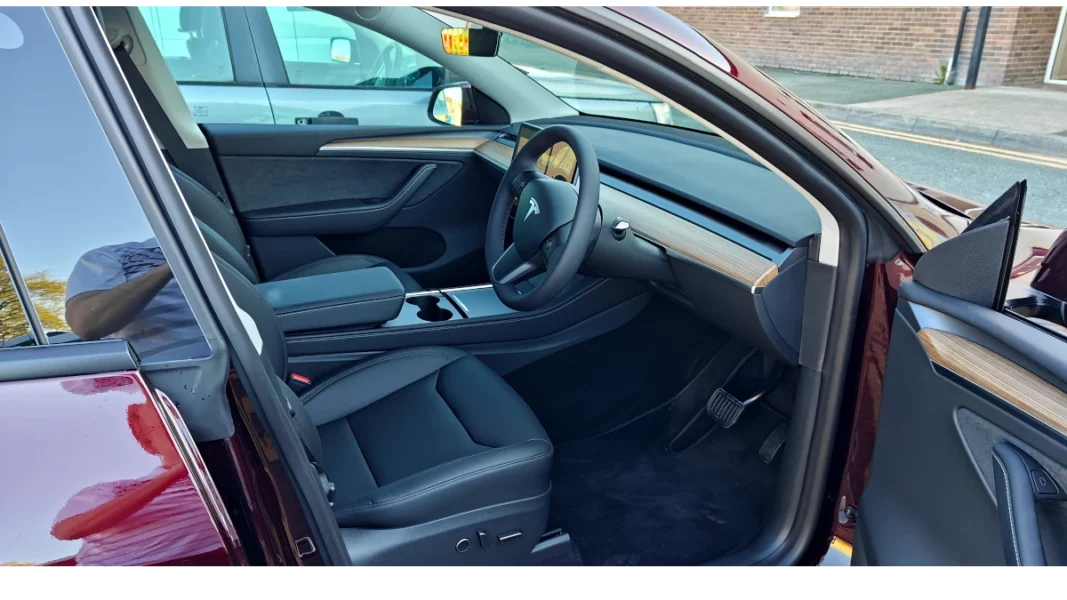
I know the Model Y isn’t to everyone’s taste. It has a minimal interior. The ride quality is no match for a Mercedes. The lack of engine noise can feel alien. If you are a high mileage driver though and need a practical solution, the Model Y delivers. As a zero-emission vehicle, it is one step closer to what corporate customers need without a big compromise on what legacy vehicles used to provide.